

Champlain's Silver Serpent
2026 Cryptid Series, Part 7


Some waters seem to invite rumor. Lake Champlain, long and cold and shadowed by the ridges of New York and Vermont, has for generations been such a place. The story most often told today is of “Champ,” the Lake Champlain Monster, but the legend did not begin with modern tourism or roadside whimsy. It’s stitched from older lore, colonial observation, and a 19th-century newspaper account that gave the creature its lasting shape in the public mind.
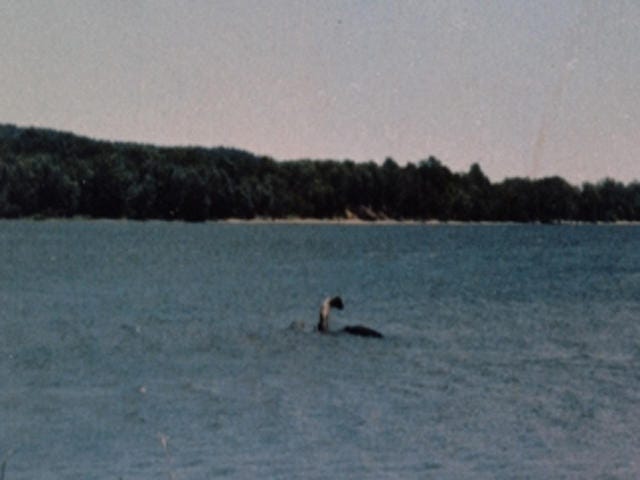
Before the famous sighting, stories were already attached to these waters. Samuel de Champlain recorded a creature the native peoples called “Chaousarou,” though many historians believe he was likely describing a garfish rather than a lake monster. The lake had been dressed in legend long before the 19th century provided a headline.
The modern Champ tradition, however, is usually traced to July 24, 1819, when the Plattsburgh Republican printed a report about Captain Crum’s sighting in Bulwagga Bay.
The Captain’s Account
According to the account, Crum was aboard a scow the previous Thursday morning when he encountered something that defied reasonable explanation. He reported a black monster, some 180 feet long with a seahorse-like head, rising more than 15 feet above the water. The details preserved in that report are wonderfully grotesque: three teeth, eyes “the color of a peeled onion,” a white star upon the forehead, and a red band about the neck.
What followed was the usual chain of monstrous things: more sightings, wider circulation, and a swelling body of local lore. More than 300 alleged sightings have been recorded since that July morning, with Champ becoming a regional icon often employed to promote tourism. Even in the age of cameras and sonar, the creature has remained elusive, which is perhaps precisely why it endures.
Rational Explanations
Skeptical explanations have always accompanied the legend, as they must. Historians suggest Champ is probably a garfish, a class that includes lake sturgeon still found in these waters today. De Champlain’s famous early account aligns more closely with such a creature than with any cryptid. This does not end the matter, of course. Shadows, waves, and unfamiliar wildlife glimpsed in poor light have started many a monster.
The lake is deep without necessarily being supernatural. Champ belongs not only to cryptozoology, but also to that long human habit of making ceremony out of wonder, of transforming mystery into meaning through ritual and repetition.
Festival and Folklore
Each August, the Moriah Chamber of Commerce celebrates Champ Day in Port Henry, New York, turning the lake monster into a seasonal civic emblem. The 2026 festival takes place on Aug. 1, promising the annual blend of music, vendors, family amusements, and waterfront spectacle. It’s a tidy modern answer to an old rural mystery: If the creature cannot be found, then at least the story may be honored.

And honor it they do. Monster imagery adorns the town. Local historians recount the sightings. Children search the waters with the sort of earnest hope that belongs only to those who have not yet learned to doubt. One suspects Capt. Crum himself might find the transformation remarkable. His terror is now afternoon entertainment.
What Endures
So the old account still stands, bright as a lantern in the dusk: a July morning on Bulwagga Bay, a witness in a small boat, and a creature said to rise from the water in a shape too long and too strange for comfort.
Whether garfish, misidentification, or the birth of a regional dragon, Champ’s first great appearance has had the lasting effect one associates with the best legends. It left behind no settled answer, only a lake full of questions.
And on warm summer evenings, when the water lies still and the mountains darken against the sky, one may stand upon the shore and wonder whether something ancient still moves beneath the surface. Whether those ripples spreading across the bay are merely wind and wave, or something larger, older, and altogether less explainable.
The lake keeps its secrets well. It always has.
For further reading:


