

Krampus
From Alpine Folklore to American Holiday Icon


The winter holiday season in the United States, once a bastion of sugar-coated cheer and Santa Claus mirth, has witnessed a delightful invasion of the macabre in recent years. Among the sparkling lights and jolly carols, an Old World figure has emerged from the shadows and we couldn’t be happier. Krampus is the fearsome counterpart to St. Nicholas but who exactly is Krampus, and how did this dark, horned figure rise from European folklore to claim his place in American holiday celebrations?
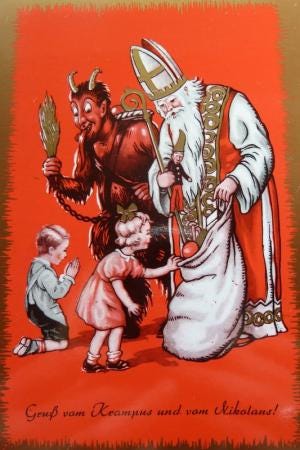
Origins in Alpine Folklore
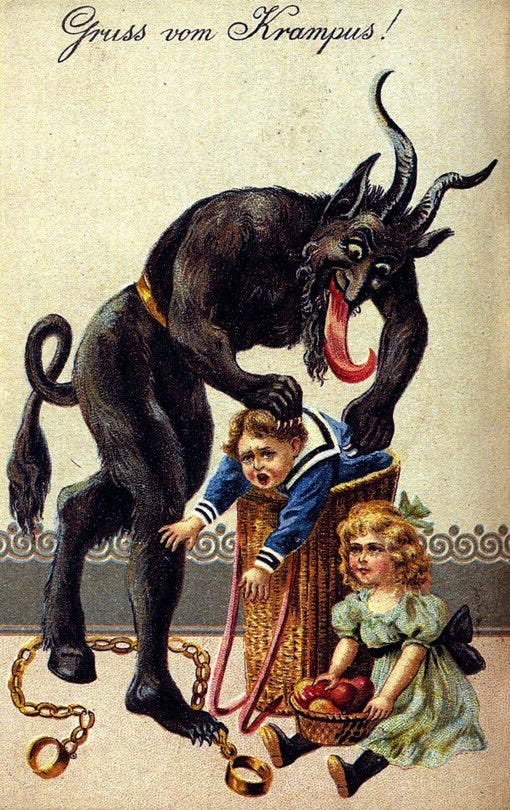
Krampus’ roots stretch back to the Alpine regions of Austria and Germany, where he has haunted the collective imagination for centuries. His name derives from the German word "krampen," meaning claw, and his appearance is a chilling (or delightful, depending on your point of view) blend of goat and demon, complete with horns, hooves, and a long, lolling tongue. Unlike the benevolent St. Nicholas, who rewards good children with gifts and treats, Krampus visits the naughty ones, dispensing punishment with a bundle of birch branches or stuffing them into his sack to cart them off to his lair.
The lore of Krampus is deeply intertwined with pre-Christian Alpine traditions, where he was likely part of pagan rituals celebrating the winter solstice. As Christianity spread through the region, Krampus, like so many other pagan symbols, was incorporated into Christian rituals. In this case, the folkloric beast was connected to the Christian feast of St. Nicholas, celebrated on December 6. On Krampusnacht, the night before, Krampus would roam the streets with St. Nicholas, creating a dramatic juxtaposition of reward and punishment to help, um, encourage children to behave. (Just like the Elf on the Shelf, right?)
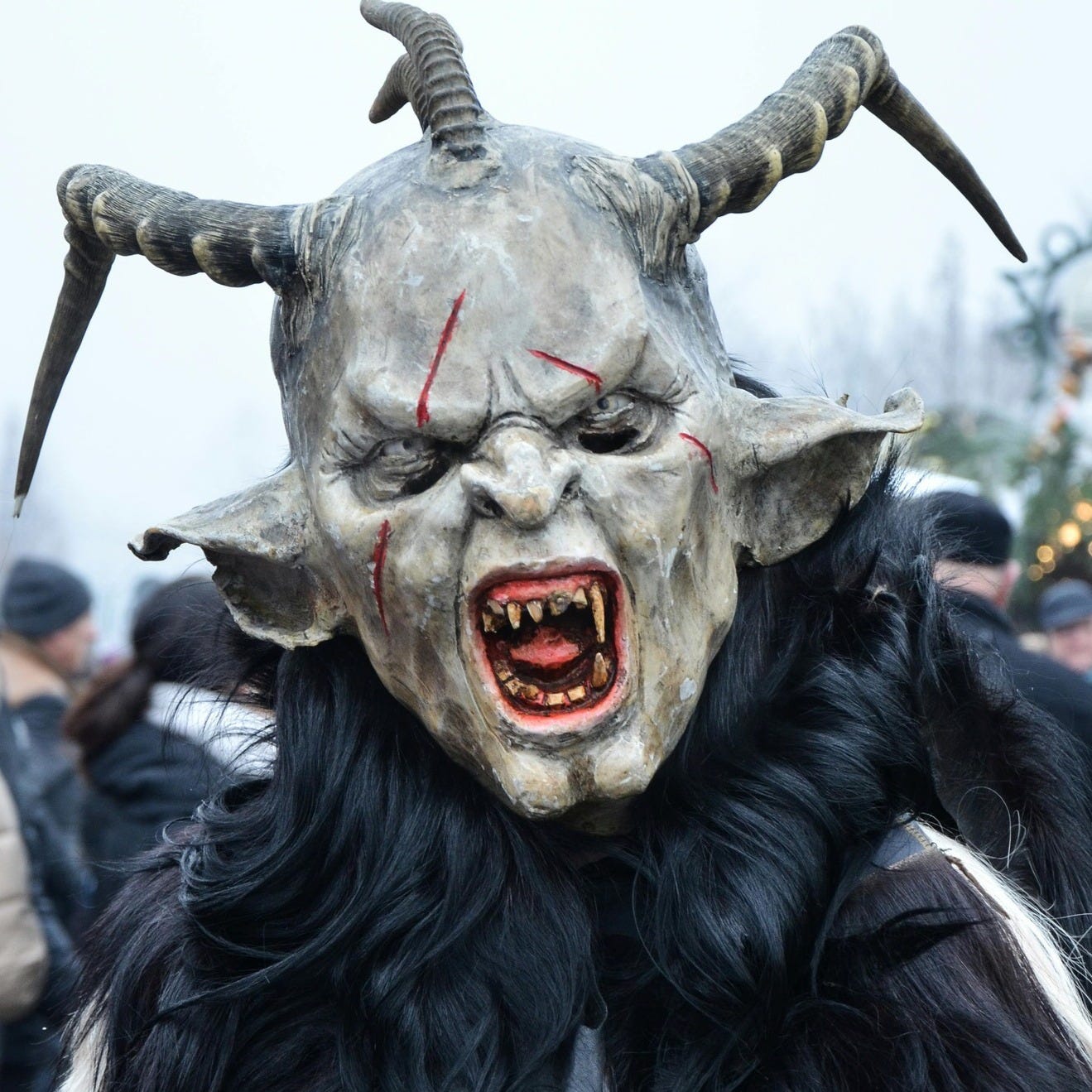
The Journey Across the Atlantic
For centuries, Krampus remained largely unknown outside of Europe. His story, steeped in local tradition and folklore, seemed destined to stay confined to the Alpine villages where it began. However, the global cultural exchange of the 20th century, coupled with a growing American appetite for the wonderfully weird, set the stage for Krampus' grand entrance into the U.S. holiday season.
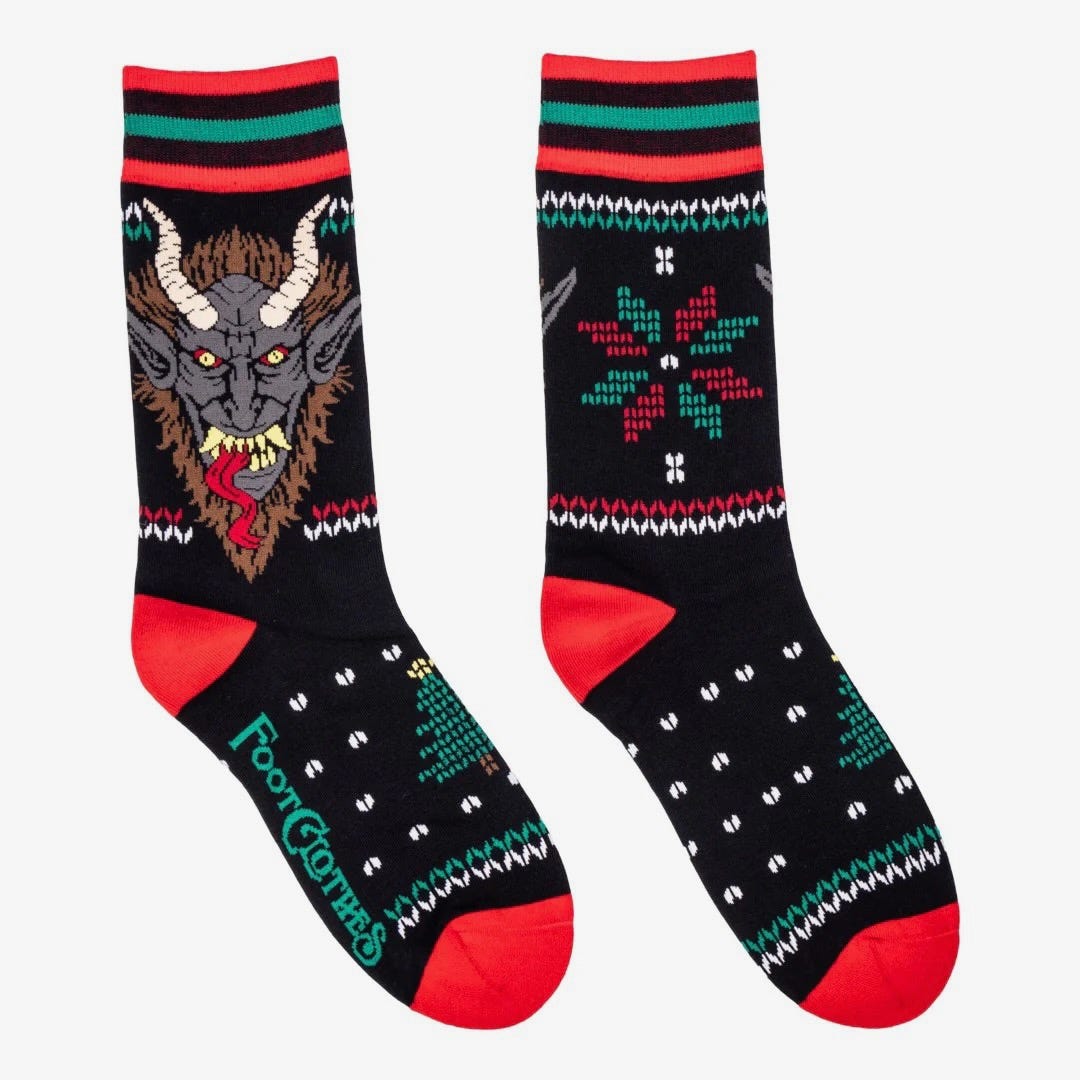
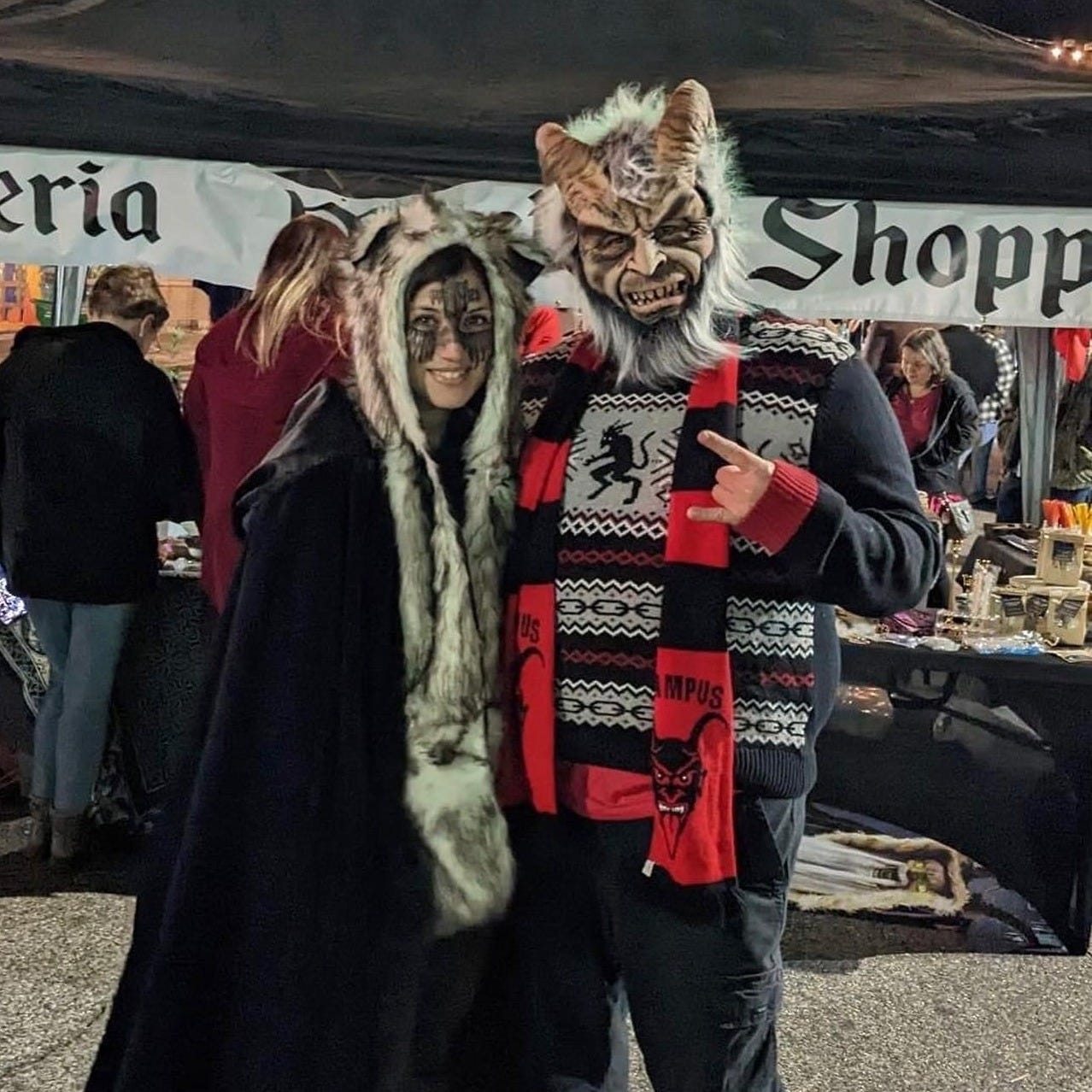
Krampus began his American ascent in the early 2000s, propelled by a combination of pop culture, social media, and a burgeoning interest in alternative holiday celebrations. Horror enthusiasts, fascinated by his menacing visage and dark backstory, championed Krampus as a refreshing antidote to the commercialized and homogenized versions of Christmas that dominate American culture. Of course, Krampus is now being commercialized as well—and as the owners of a Krampus mask, ornaments, playing cards, socks, sweater, and scarf … yes, I guess we are partly to blame.
Krampus in Pop Culture
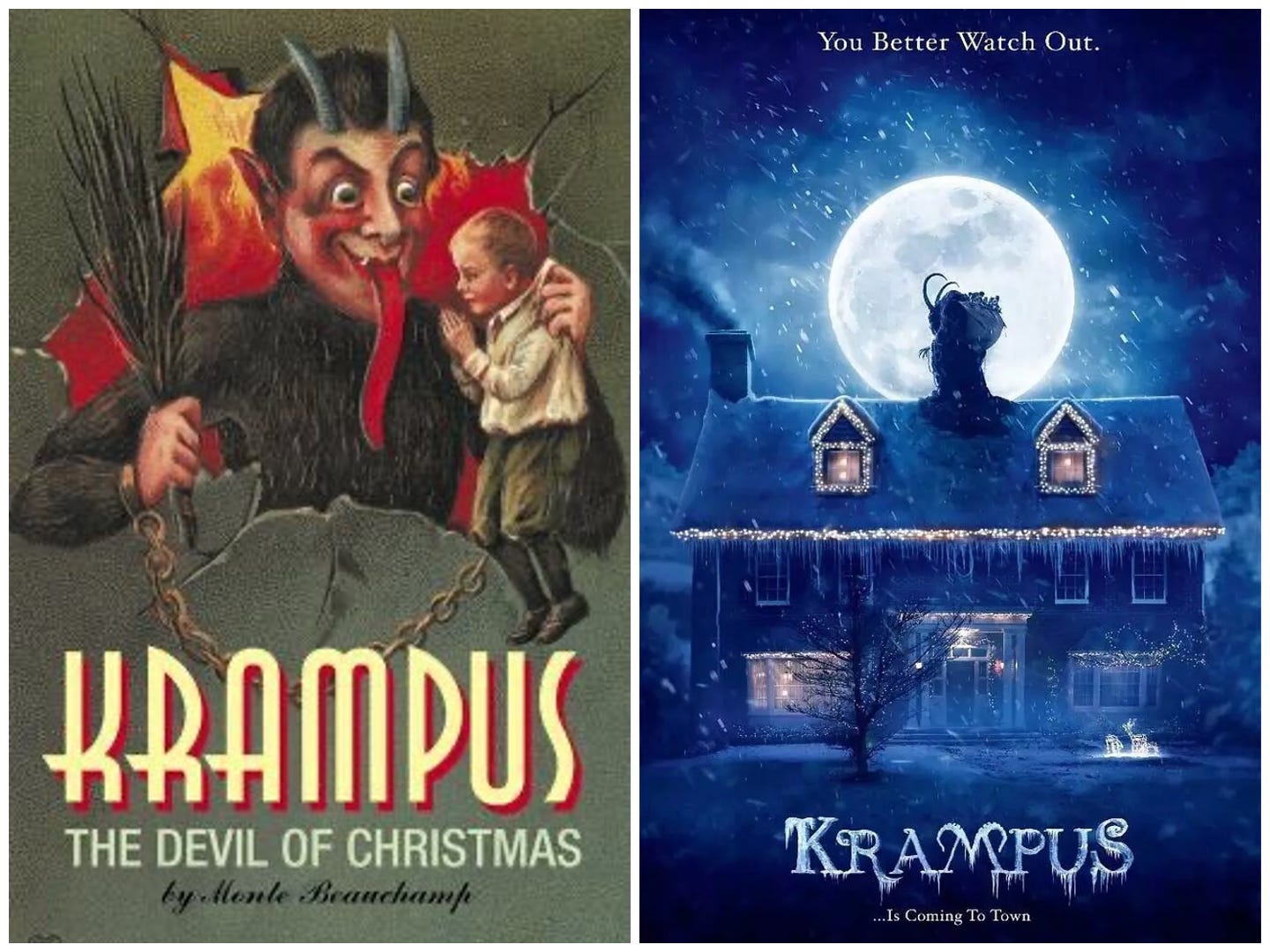
In 2004, the artist and writer Monte Beauchamp published Krampus: The Devil of Christmas, a collection of vintage Krampus postcards that piqued interest and nostalgia. This was followed by the 2015 horror-comedy film Krampus, directed by Michael Dougherty, which introduced the creature to a broader audience with its blend of fright and festive fun.
The internet has also played a significant role in Krampus' American journey. Memes, fan art, and social media posts have turned Krampus into a viral sensation, spreading his legend far beyond the confines of traditional media. While festivals and parades have long been a part of European tradition (the annual parade in Munich comes to mind), similar events celebrating Krampusnacht have sprung up across the country, from Los Angeles to Philadelphia, drawing crowds eager to embrace this darker side of the holiday season. Dare we say that even our little village that houses Grimrose Manor has seen Krampus make his way to its downtown streets.
A Modern Holiday Icon
Krampus' integration into the American holiday landscape speaks to a broader trend of embracing the macabre and mysterious. As always, we approve! In a culture that often sanitizes and simplifies, Krampus offers a counter-narrative that resonates with those seeking a more nuanced and multifaceted approach to holiday celebrations. His presence adds a layer of depth and historical richness to the winter season.
Moreover, Krampus taps into a collective fascination with folklore and mythology, serving as a bridge between ancient traditions and modern festivities. His story, though fearsome, is ultimately one of balance—of light and dark, reward and punishment, celebration and caution. This balance is something that many find appealing, providing a reminder that even amid holiday cheer, there is always room for a little bit of darkness.
So mark your calendar now for December 5 and revel in the dark side of the holidays with a celebration of Krampusnacht.
Good summary. Not only intelligent but just plain fun. Perhaps my novella may interest you, which mines the Krampus lore while also being a homage to Dickens' A Christmas Carol.
https://johnsonp.substack.com/p/the-krampus-st-nicks-alter-ego