

Phantom Signals
Ghosts of the Early Radio Age


There’s a particular hush that lives between stations on an old radio. Turn the dial slowly, and the silence coughs. For collectors, those pauses are full of promise. As we at Grimrose Manor finish an unintended series of communicating with the dead, this time we turn to another device that I collect: radios.
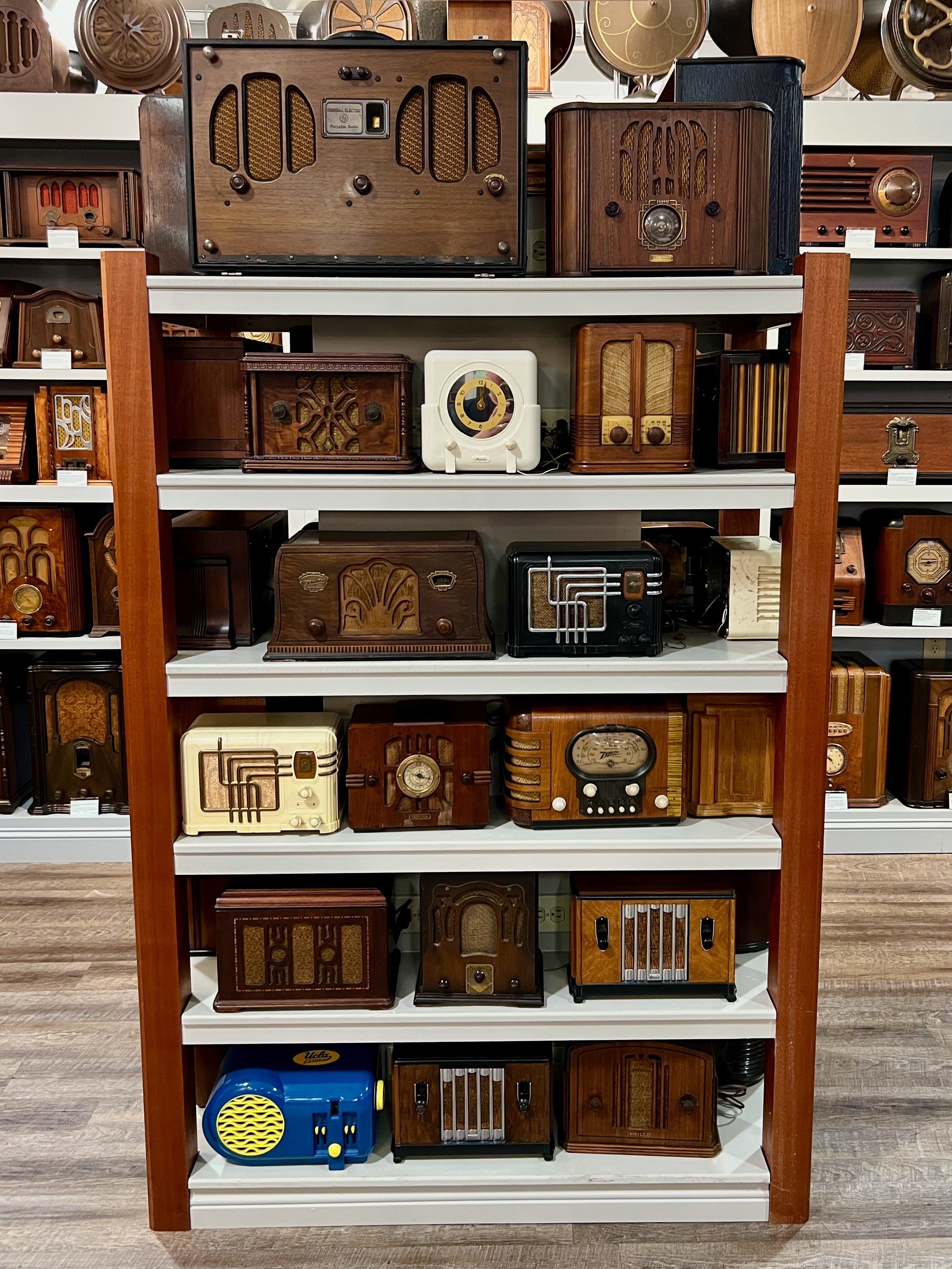
My favorites are the wooden radios, and I have around 15 models ranging from Arvin to Zenith. I have some plastic and Bakelite models, too, but the old wooden relics with their vacuum tubes and classic good looks just warm my heart. Give me a cathedral or tombstone radio any day over the boring modern machines we produce now.
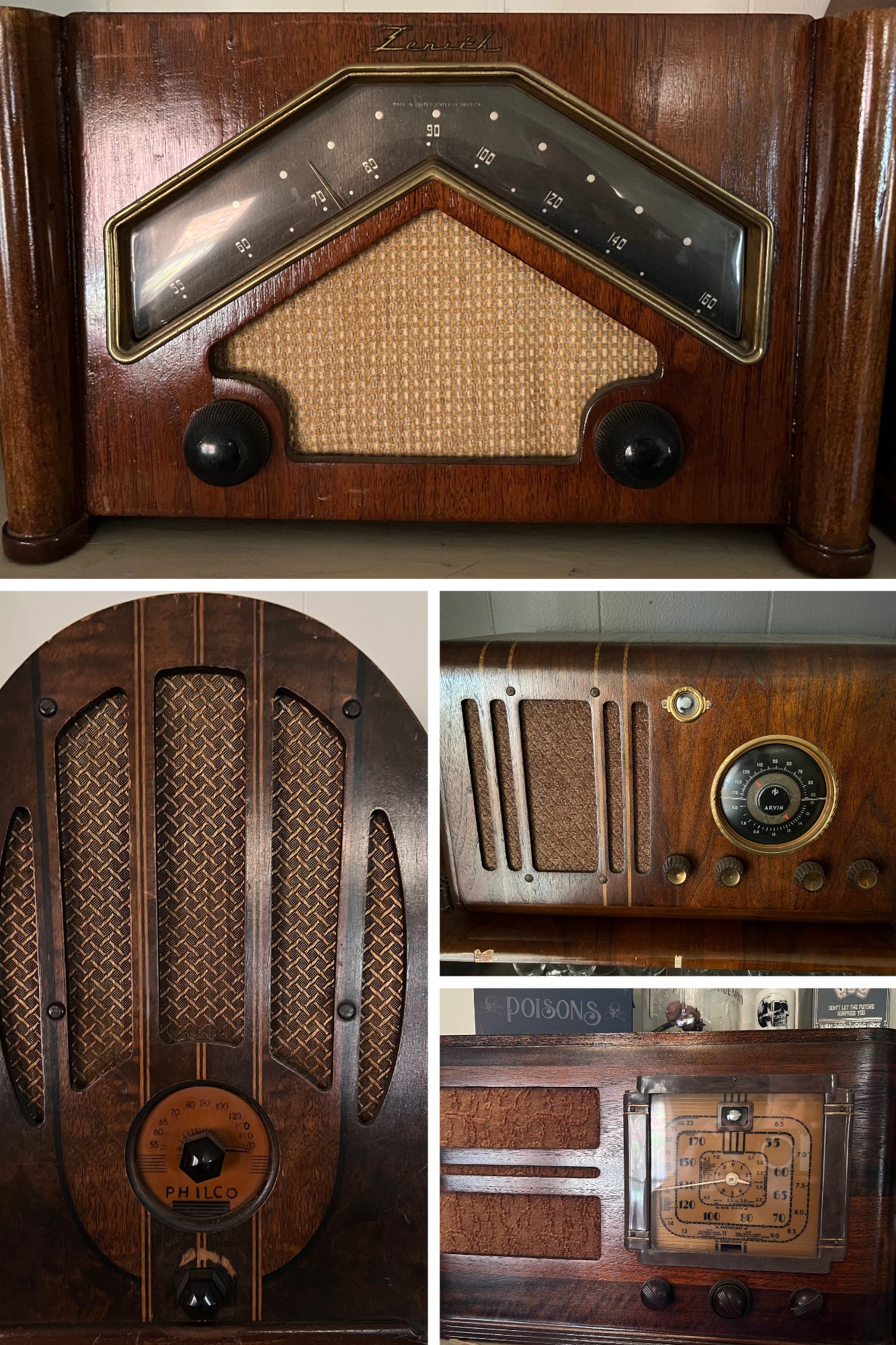
Long before podcasting or push notifications, telegraphs and telephones had taught people that distance could be overcome with wiring. When radio arrived in the early 20th century, it did something stranger—something that felt distinctly supernatural. It let voices travel without visible cables, manifesting from thin air like spectral presences summoned by incantation. The magic tuning eye glow resembled séance candlelight. The tuning fork of an antenna reached toward invisible realms. The startling intimacy of a broadcast voice arriving in one’s parlor felt like communion with the unseen.
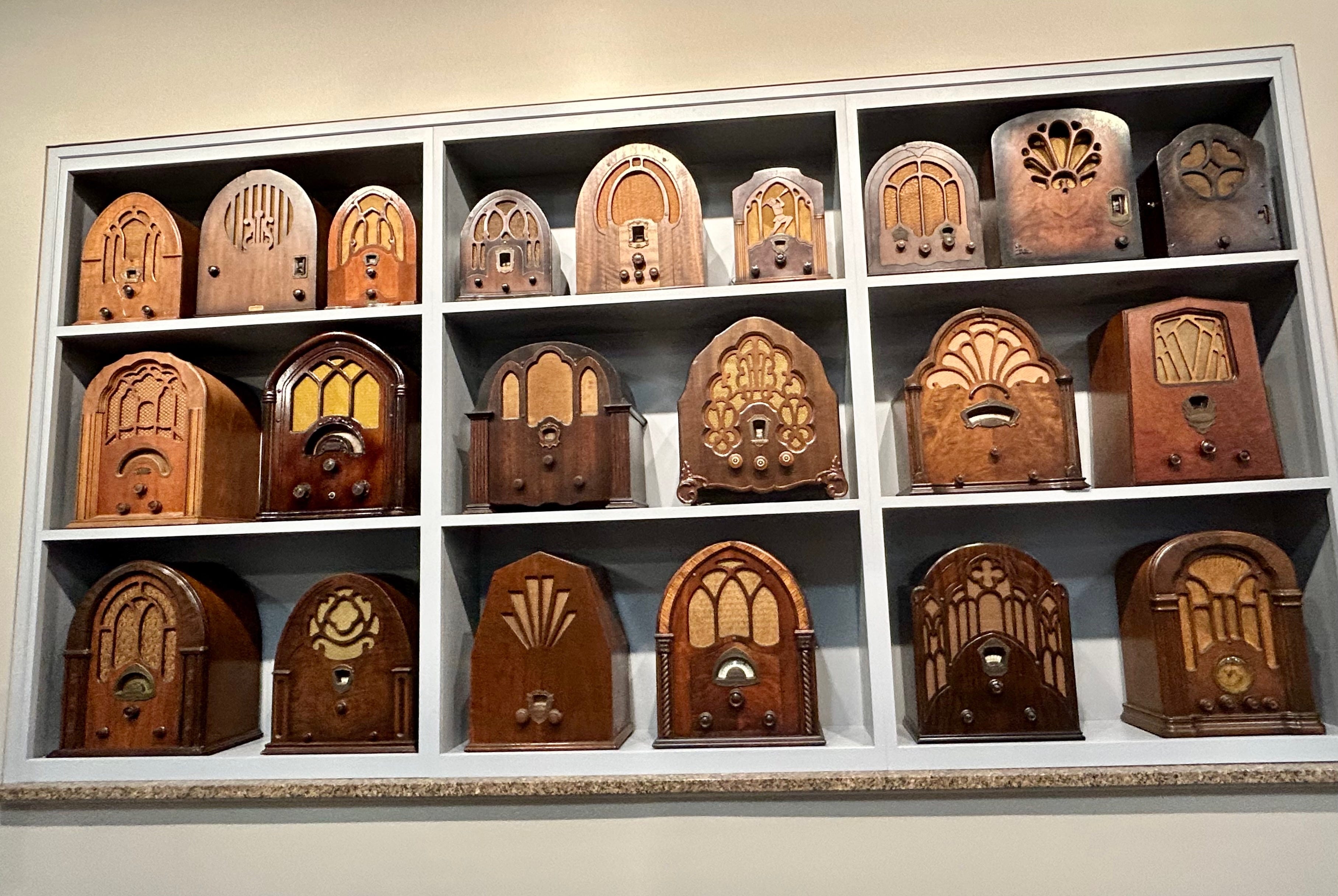
Spiritualism, which had thrived in Victorian drawing rooms since the Fox Sisters first heard their famous “rappings” in 1848, found a curious new laboratory in electromagnetic space. If spirits could knock on tabletops, why not on wavelengths? The early radio age taught a new generation to listen for the departed with their machines.
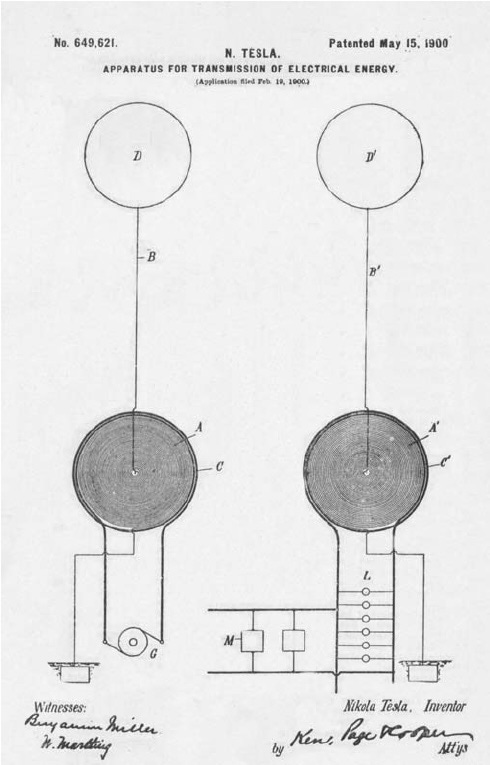
Inventors and experimenters fed that yearning. In popular retellings, Nikola Tesla sometimes appears as both scientific paragon and mad conjurer. Unlike Thomas Edison, who was an unrepentant capitalist, Tesla said the earth was a conductor and the ether a medium for messages. He spoke poetically about signals that might come from “other worlds,” and the imagination did the rest. If the engineer proposed the mechanism, the listener supplied the meaning.
Amateur radio operators with their hand-built sets and nocturnal obsessions reported uncanny things. On long winter nights, hunched over glowing tubes and coils, they would hear stations that shouldn’t be there: garbled syllables, stray music, a voice that seemed to overlap like a lost overlay of time. Anecdotes spread in newsletters and small-circulation bulletins. They spoke of a faint name called from static, a loved one’s tone caught at the edge of reception.
The phenomena was later given a tidy name: instrumental transcommunication (ITC). Italian Marcello Bacci, the grandfather of ITC and direct radio voice communication, provided spirit communication to the families of deceased loved ones for decades. When magnetic tape recorders became affordable in the mid-century, those taped fragments took on a new life under the label Electronic Voice Phenomena (EVP), and the séance moved from tablecloth to reel-to-reel.
EVP researchers would leave machines running, often in empty rooms, then play back the reels with a mixture of dread and hope. From the hiss emerged syllables—sometimes a full sentence, more often a fragment—that listeners swore could not be explained by interference or pattern recognition alone. One of the most famous cases associated with hearing from the dead via radio signals involves Konstantin Raudive, a Latvian doctor and parapsychologist, who claimed in the 1960s to have recorded the voices of deceased individuals using radio equipment and tape recorders. Raudive collected more than 72,000 recordings and published a book on his findings, which brought significant publicity to the concept of EVP.
Skeptics pointed at radio bleed, meter hum, and the brain’s appetite for patterns, the latter being an example of the pareidolia that causes us to misperceive incoming stimuli. Believers then countered those arguments with repeated instances, cross-checked and cataloged, a kind of amateur rigor that borrowed the language of science.
What is striking is not who is right but how persistent the notion remains. Today, we see a search for EVP on every paranormal show. There is a strong belief by many that frequencies can house voices.
The logic is simple and haunting. If sound is carried across space, then electricity could be persuaded to speak or sing. Meanwhile, human grief seeks channels. Radio and recording once offered the perfect stage for that longing. They modernized the old impulse for séance, that attempt to extend conversation beyond the human lifespan, and wrapped it in circuitry.
So the next time you encounter one of these wooden sentinels, consider the possibility. When you turn the dial of an antique set, tune slowly through the spaces between stations. Listen not just for the obvious—the weather report, the distant ballgame, the talk show host’s familiar patter—but for what hides in the margins.
For further reading:

