

The Last Portrait
The Victorian Obsession with Postmortem Photography


Viewer discretion: Contains photographic images of the deceased.
There’s a hush to an old family album, passed down for generations, that no modern selfie can quite reproduce. There in the browned margin rests a small portrait of your great-great aunt with her eyes unnervingly bright, the caption dated 1893. Look closely and you begin to notice a similarity among many images of the era. The hands are carefully arranged, the head tilted as if asleep. In a surprising number of cases, that stillness is not repose at all but the last artful pose of a postmortem photograph.
The Victorian Death Cult
There’s something deeper here, something that explains why the Victorians didn’t just photograph their dead but built an entire industry around mourning itself.
People of the 19th century were obsessed with death in ways that seem almost pathological to us now. This wasn’t mere morbidity, it was an elaborate cultural response to mortality rates that would horrify us today, even after COVID-19. In that day, pandemics of cholera, tuberculosis, typhoid, smallpox, scarlet fever, and influenza swept through cities like spectral harvests. Queen Victoria herself, after Prince Albert’s death in 1861, wore black for 40 years and transformed mourning into a national performance art.
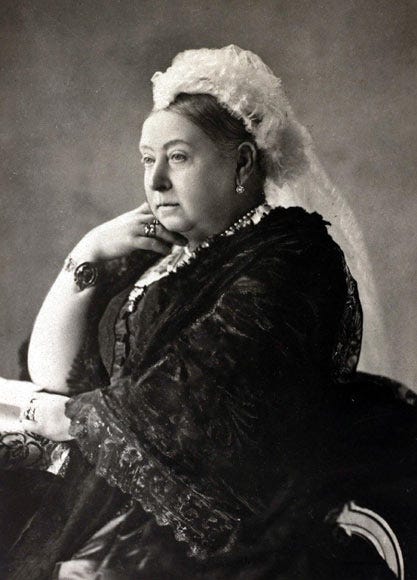
The Victorians built elaborate rules around grief: strict mourning periods lasting years, black crepe worn in specific patterns to indicate stages of bereavement, jet jewelry carved into weeping willows and urns, hair of the deceased woven into bracelets and brooches. They wrote guidebooks on proper mourning etiquette. They designed special stationery with black borders. They even created “mourning warehouses,” which were entire shops dedicated to the commercial apparatus of grief.
This wasn’t squeamishness about death but rather an attempt to control it, to create social structures that made the unbearable slightly more bearable. Death was everywhere, so death had to be managed, ritualized, made beautiful and meaningful rather than merely brutal.
The Victorians believed deeply in an afterlife and in the thin membrane between this world and the next. Spiritualism flourished during this era: séances, spirit photography, instrumental transcommunication, spirit typists. Postmortem photography fits neatly into this worldview. If spirits could be communicated with during séances, why not use technology to preserve the earthly vessel before it returned to dust?
The Art of Stillness
These were not the spur-of-the-moment snapshots of today. Early daguerreotypes required patience. Later, as paper negatives, tintypes, and cabinet cards appeared, the process became faster but still deliberate. Photographers, recognizing the sensitivities of bereaved clients, developed an expertise in the staging of death. Bodies were propped with hidden braces, hands positioned with tenderness, eyes sometimes painted onto the plate or coaxed open for the camera’s gaze. Children were “put to sleep” in the arms of grieving parents. Grandfathers sat upright as if merely peering over the pages of a ledger.
In contrast with funeral photography, which offered a more obvious portrayal of the deceased lying in their coffins, postmortem photography aimed for lifelike. Identifying a postmortem photo can sometimes be difficult, particularly if only one person is photographed. Images with multiple sitters make it simpler, as only one will be in focus while others (the living) are slightly blurred.
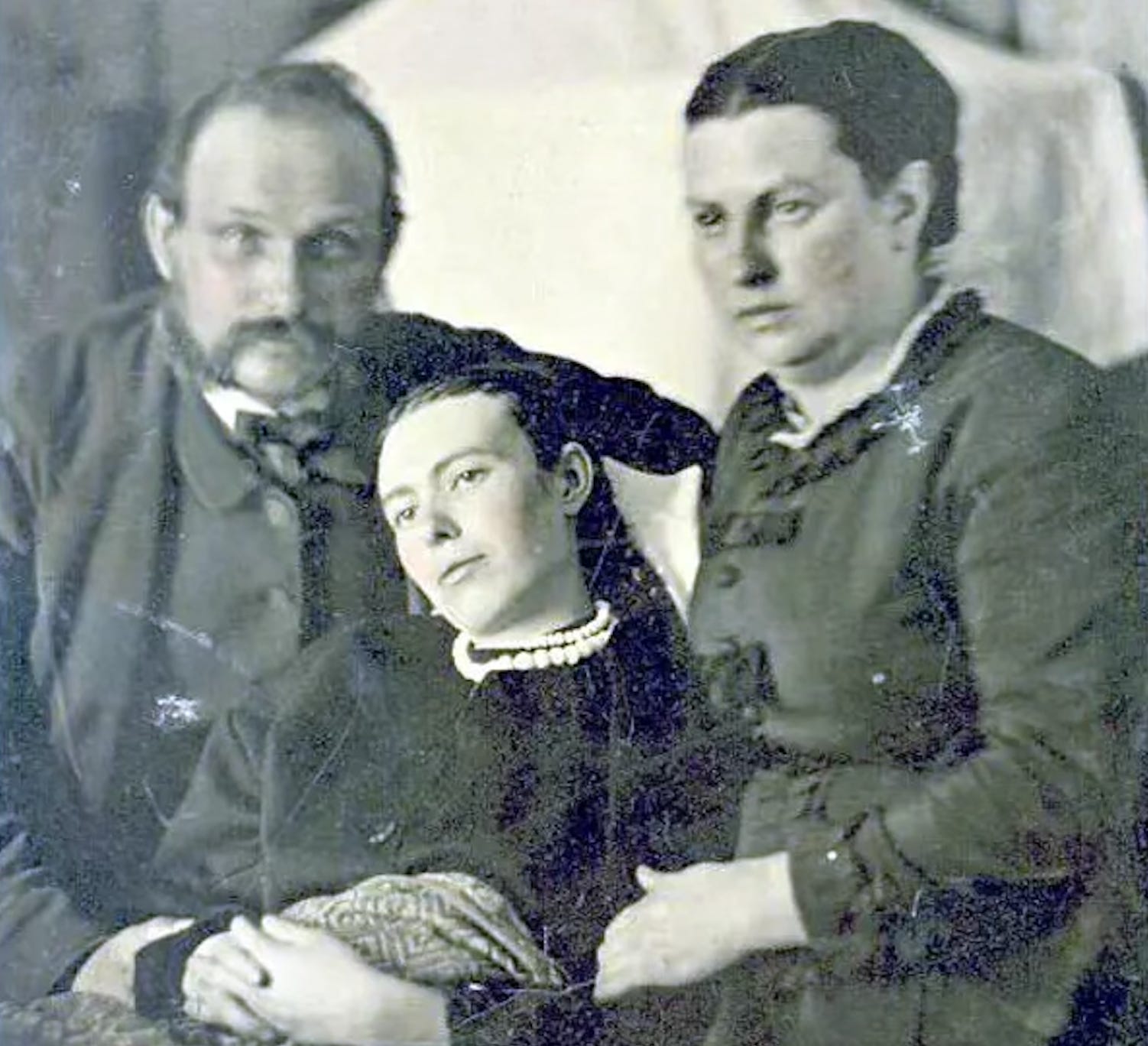
A Rugged Compassion
Why undertake this intimate, slightly ghastly (at least to our modern eyes) ritual? Reasons could be part economic and part emotional necessity. In a time of deficient healthcare and no vaccines, infant and illness mortality were grimly common. For many families, the postmortem image was the only likeness they would ever possess. In a time without ubiquitous portraiture, a photograph served as evidence of life, a tangible token to be kissed, kept in a locket, pasted to a mourning card, or propped on a mantel beside a grieving candle. It allowed the living to domesticate grief, to hold it in hand. Death was, in other words, made tangible.
There was also a cultural logic. Where a eulogy might speak for the dead for an hour, a photo could speak for a lifetime. The image functioned as proof that your dearly departed had lived, had laughed, had been loved. It fixed the shape of mourning into an heirloom.
That same utilitarian tenderness can look unsettling now. In modern times, we read those portraits through very different aesthetics and anxieties. Yet collectors, historians, and even descendants find something else there: a rugged, if melancholic, compassion. The images are not merely relics of mortality but artifacts of care. They illustrate people doing the best they could with a new technology and a persistent ache.
For the curious, there are still communities who study and revere these images—collectors who swap prints in online forums, archivists who preserve a family’s last portrait, Facebook groups (such as Victorian Post Mortem Photography) where interest often balances between scholarship, curiosity, and sentimental devotion. Whether you approach these pictures as history or haunt, they ask the question of how will we remember the ones we lose?
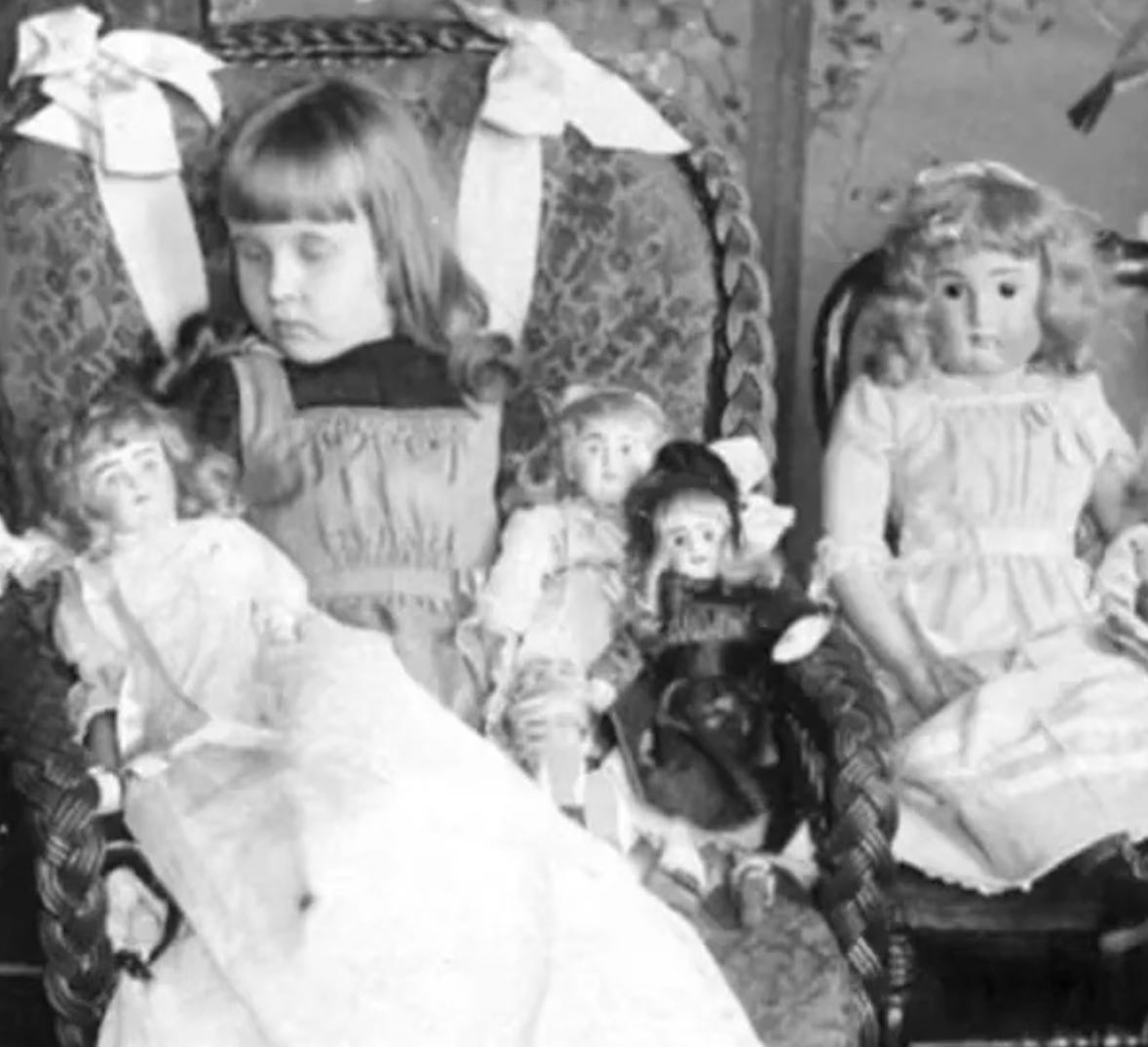
The Album’s Secret
Today, our rituals have shifted. We post a memorial thread, we archive stories to servers in the cloud, we upload a carousel of faces to digital frames. But the impulse remains to make absence comprehensible, to translate grief into a thing that can be shown and held. Postmortem pictures retain their power because they are evidence of that human desire.
So, take that old family album down from the shelf. Turn the pages slowly. Feel the weight of the cardboard mounts. You may find yourself uncertain which portraits show the living and which show the dead. This deliberate ambiguity was a way of keeping the departed among the living just a little longer. And perhaps that’s the most haunting thing about these images. It’s not that they show us death, but that they show us how desperately the living wanted to deny it, to freeze time, to keep the dead present through sheer force of will and chemistry and light.
A posthumous portrait may give you a chill or, perhaps, a strange quiet comfort. Either way, you’re looking at love made visible.
For further reading:


You can even see this played out on gravestone epitaphs. In the 1870s period, I have found epitaphs with reference to "the light" or "guardian angels." It is a startling shift once you notice it.