

Tracing History
Cemeteries Along the Natchez Trace Parkway


Deep in the heart of the American South was a winding pathway through the wilderness—first worn down by animals and Indigenous tribes, namely the Natchez, Chickasaw, and Choctaw. Over the centuries, many people would find it useful, including soldiers, traders, and boatmen finding their way home from the mouth of the Mississippi.
But as the trail grew in use, the more dangerous it became. Inns, known as “stands,” sprung up to provide weary travelers a modicum of comfort—but armed highwaymen were known to lay in wait to attack, with some coming to call the Trace the Devil’s Backbone. At least one famous explorer died under mysterious circumstances…
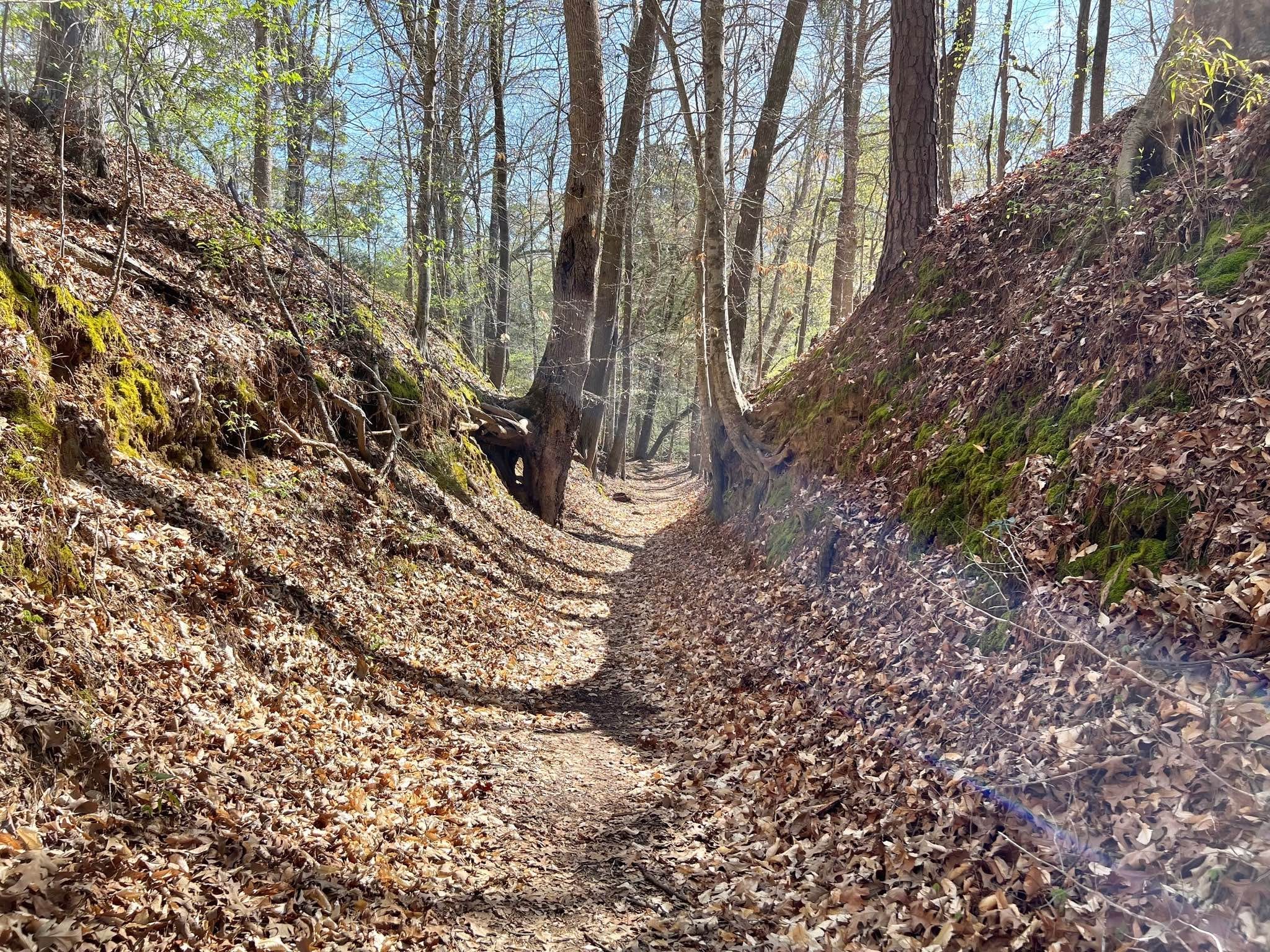
Today, the Natchez Trace Parkway is known as a scenic drive and historic road maintained by the National Park Service. Spanning 444 miles, the Trace stretches from Natchez, Miss., runs through Jackson, Tupelo, the northwest corner of Alabama, and ends in Franklin, Tenn., just south of Nashville. To a modern sensibility, it’s a slow-paced drive featuring pleasant views and a conspicuous lack of billboards.
Grimrose Manor has included many haunting stories from stops along the Natchez Trace—covering ghost tours and cemeteries in Natchez, Jackson, Florence, and Franklin—in part because we were researching our recently published travel book, Guide to the Natchez Trace Parkway.
But you needn’t leave the Trace itself to walk amongst the dead: there are at least 10 cemeteries to be discovered along the way. Here are some brief details you may not find in official guidebooks.
Old Trace Exhibit Shelter (milepost 8.7)
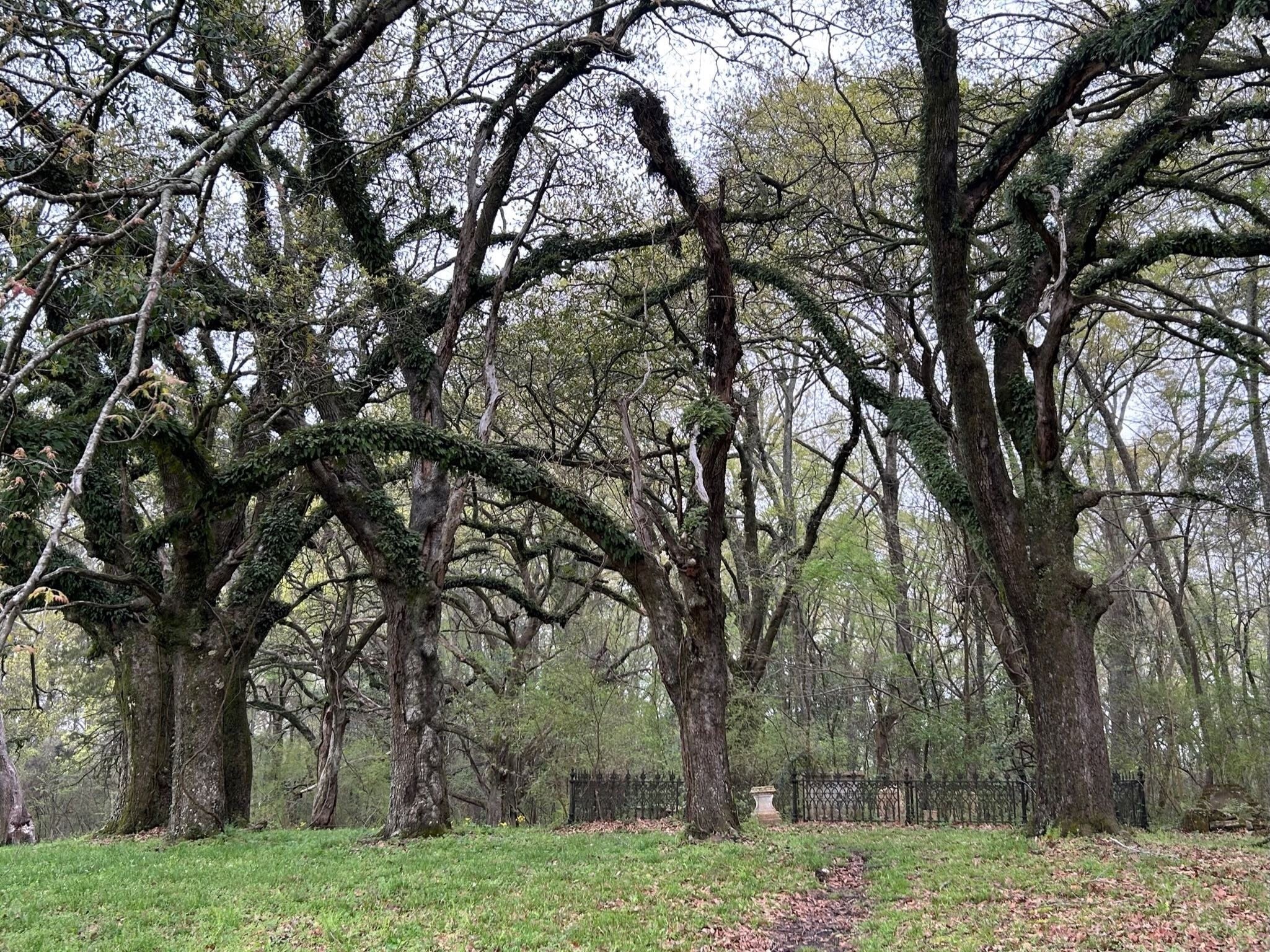
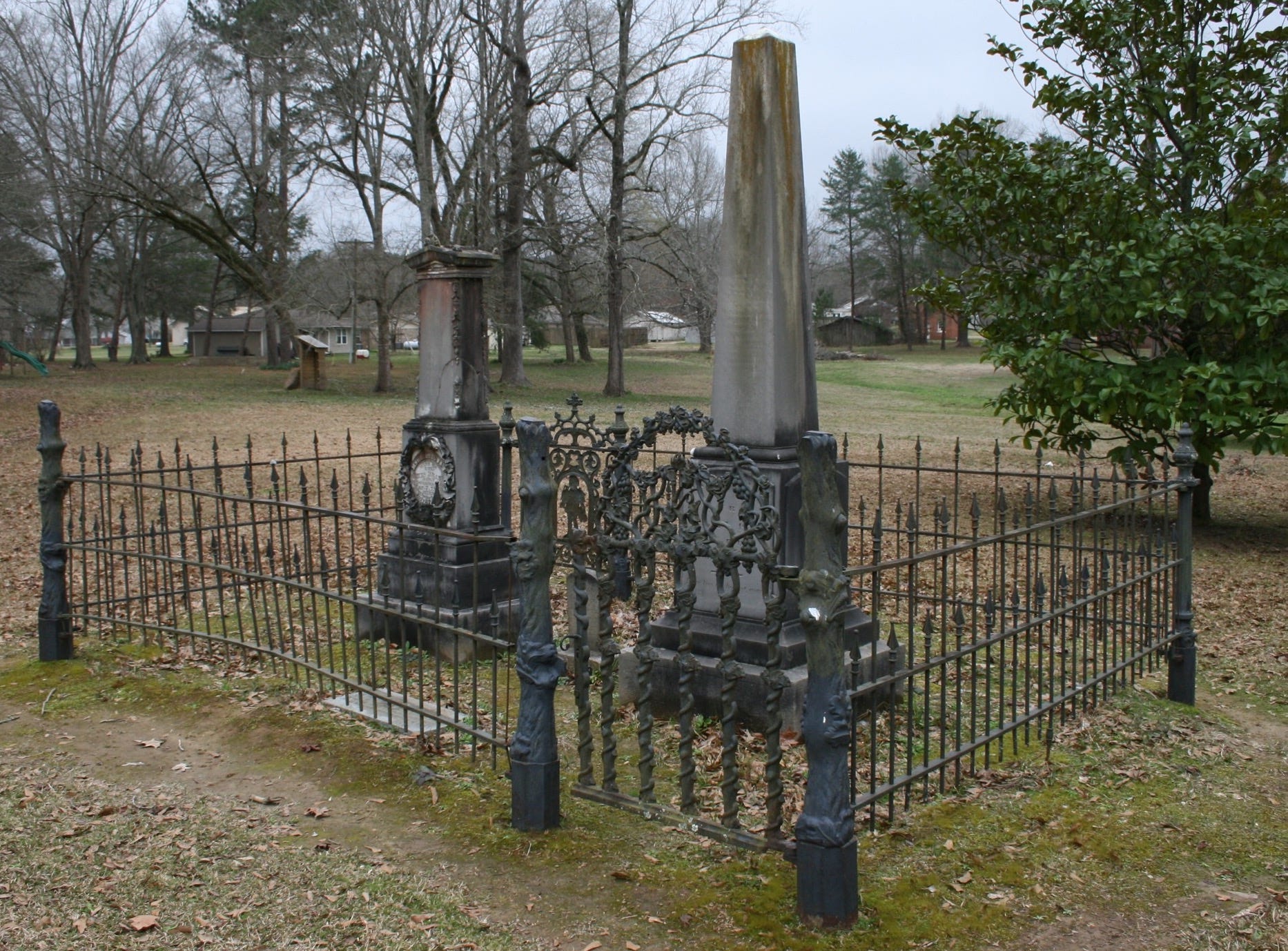
Behind an unassuming shelter with informational panels about the Old Trace footpath, you’ll find the Brandon Children’s Cemetery. Under the branches of eerie oak trees, with elaborate monuments surrounded by ornate iron fencing, seven siblings are buried. Their former home, known as Brandon Hall Plantation, is now one of many bed and breakfasts found in Natchez, Miss.
Mount Locust Historic Inn & Plantation (milepost 15.5)
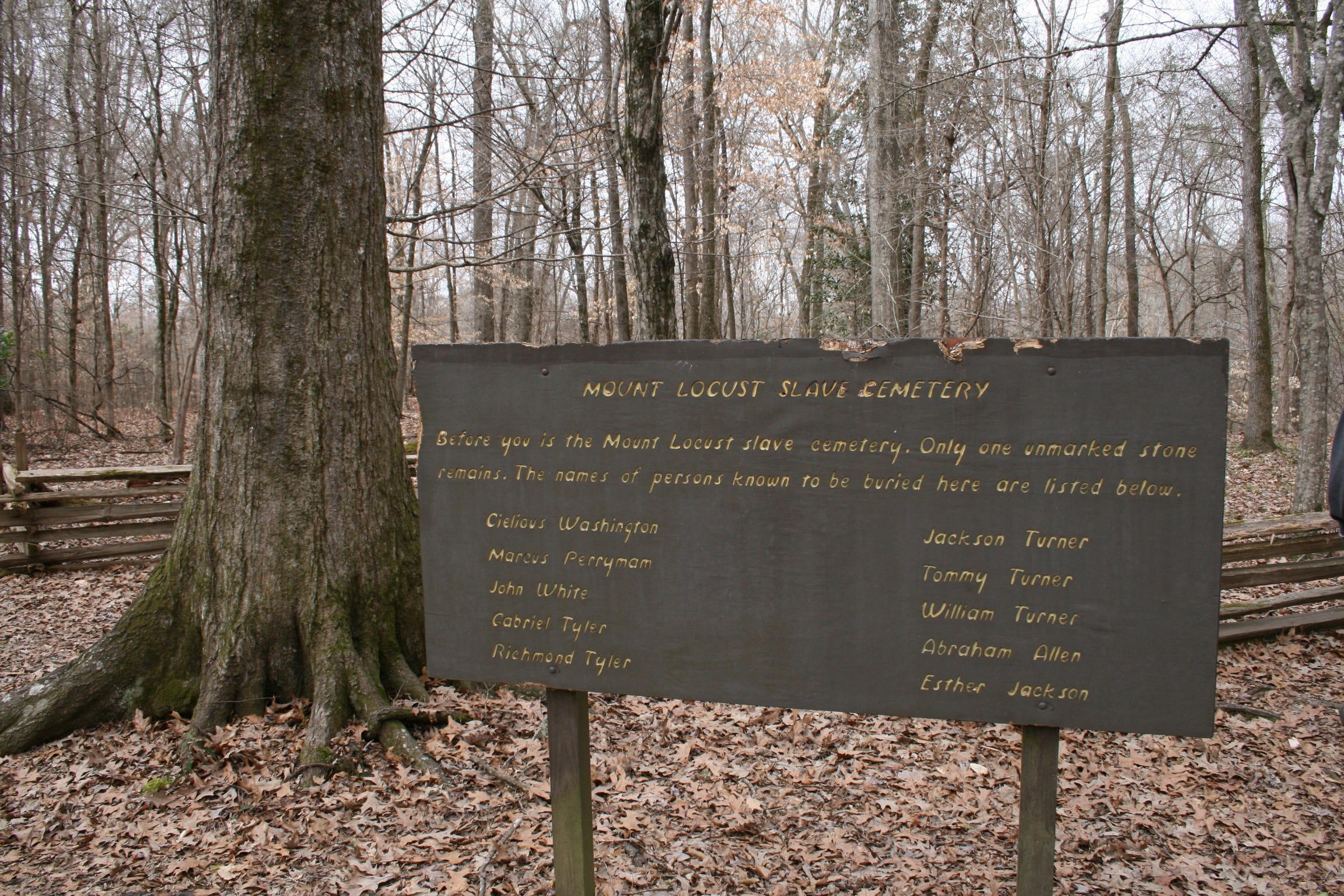
Built around 1780, Mount Locust is one of the oldest structures along the Trace. Originally an inn, it became a cotton plantation owned by five generations of Chamberlains. In addition to a small family cemetery surrounded by iron fencing, a wooden marker now commemorates the 43 enslaved laborers buried there; however, only 10 of their names are known.
Grindstone Ford Trail (milepost 45.7)
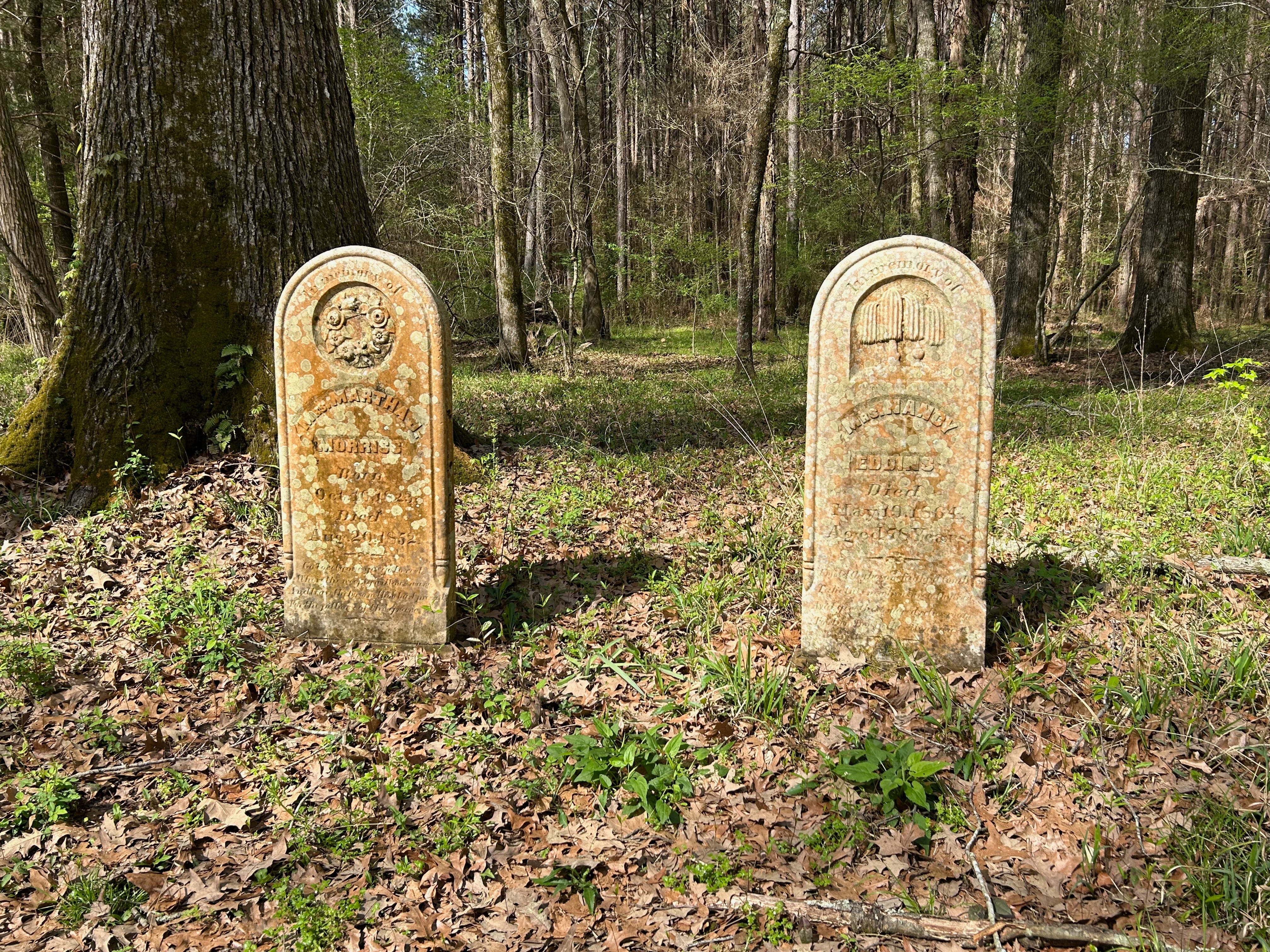
If you take the short hiking trail at Grindstone Ford—the site of an old mill—you’ll come upon a handful of tombstones scattered in the woods. Unfortunately, the graves of these pioneers have not been well maintained. Many of the markers are broken, but several are still standing and legible.
Rocky Springs (milepost 54.8)
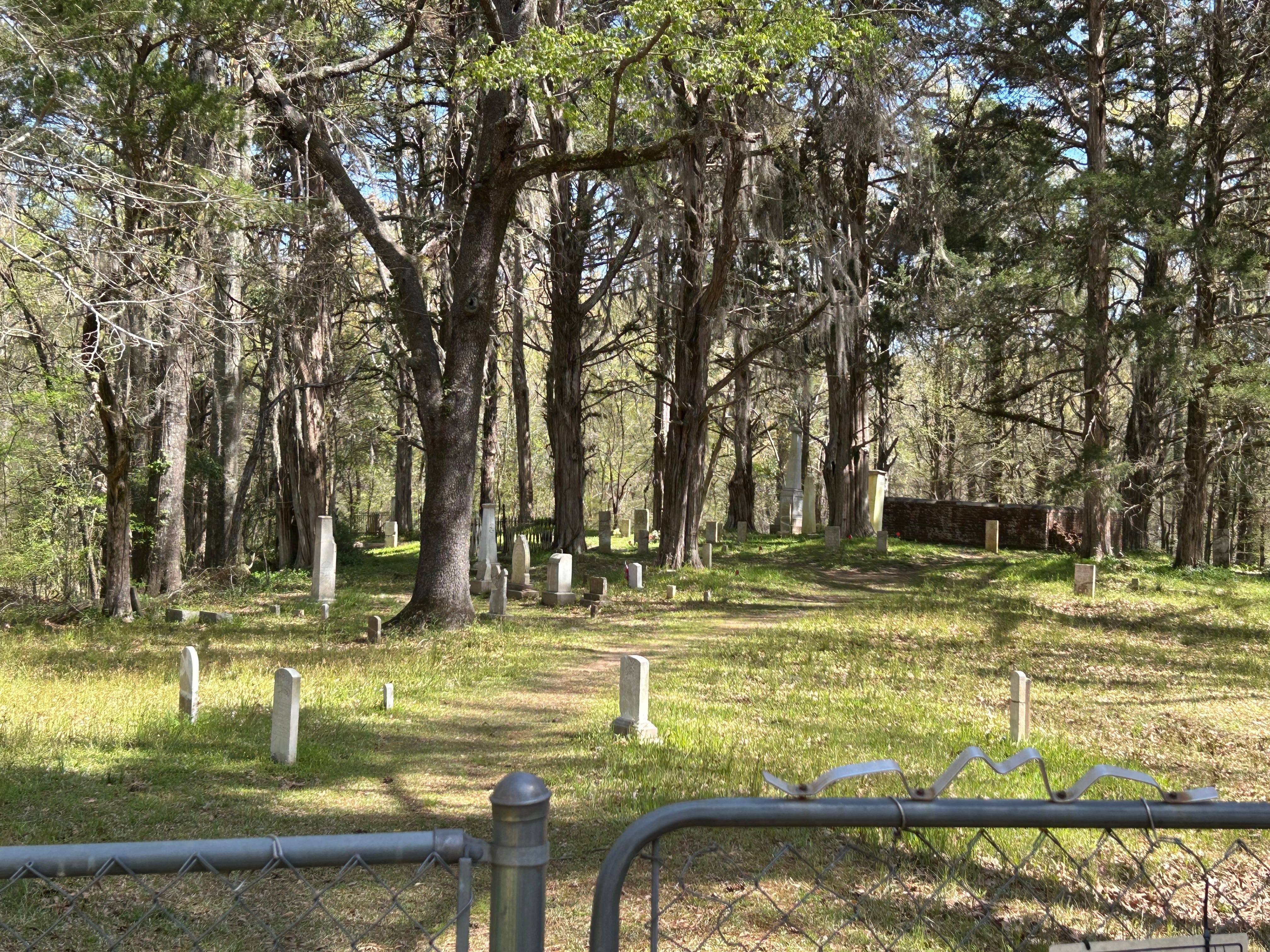
This place is worth a visit if only because it’s a literal ghost town. Once home to several thousand people, the town of Rocky Springs was plagued by war, yellow fever, a boll weevil infestation, and finally, the death of the spring itself. Today, Trace travelers and campers can walk the hiking trail to learn about the hardships the original inhabitants faced. Eventually the trail makes its way to an 1837 church building (still used on occasion) with a lovely fenced-in churchyard beside it.
Deans Stand (milepost 73.5)
Technically this grave site requires leaving the Trace about a 10th of a mile down an old side road, but according to folks who were more explorative than we were, a small cemetery can be found just past a rickety bridge. (Images at the link.)
Cowles Mead Cemetery (milepost 88.1)
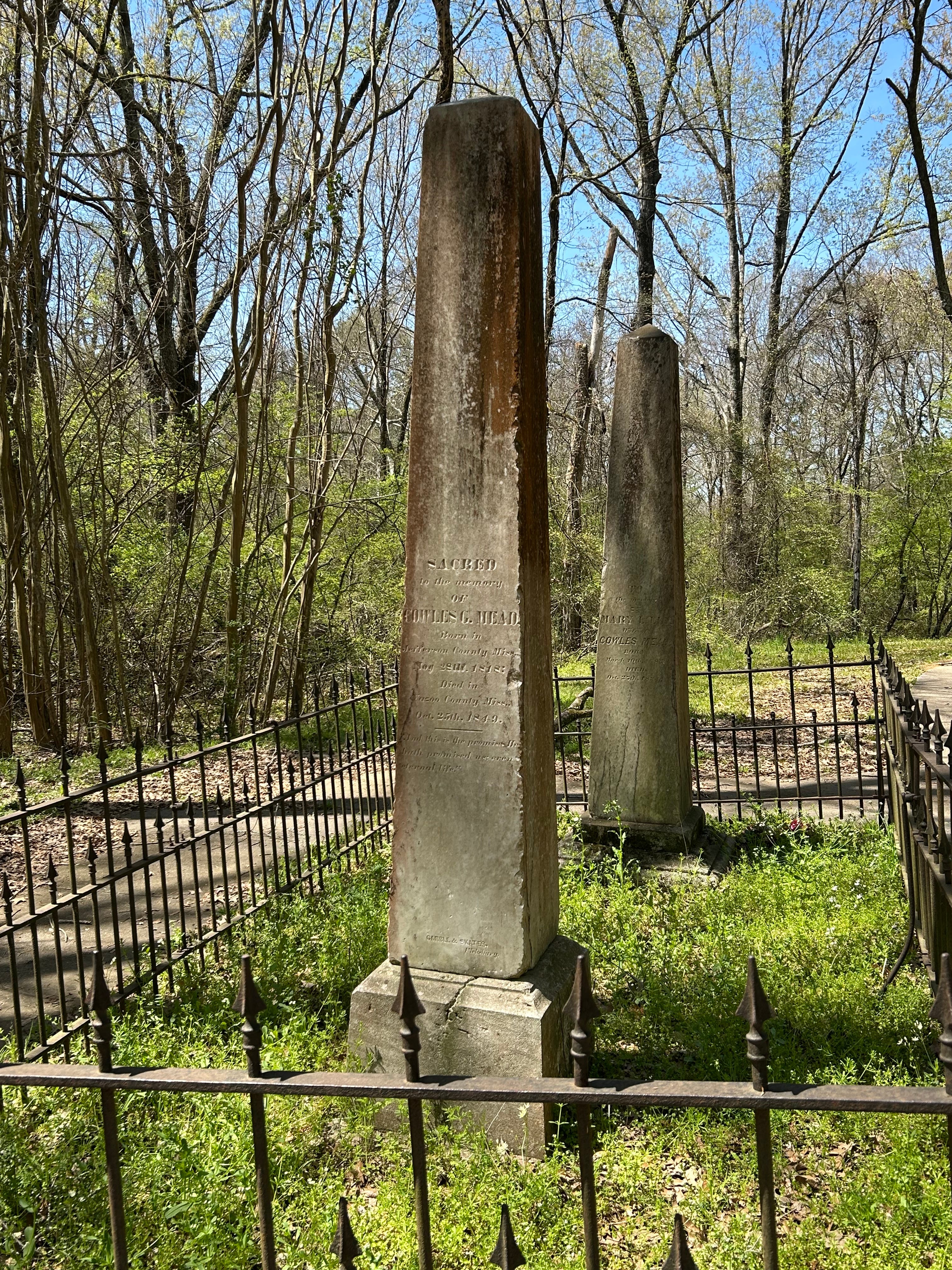
This one is no surprise, as cemetery is in the name, and a short paved path takes you to the spot from the parking lot. In this family plot you’ll find the graves of Cowles Mead (a former acting governor and U.S. Representative who once ordered the arrest of Aaron Burr!) and his wife, Mary. Their nearby home was burned down during the Civil War.
French Camp Historic Village (milepost 180.7)
This stop is a special one because there’s a lot to explore: a museum, pottery studio, blacksmith shop, carriage house, and one of the only restaurants you can find on the Trace. Established in 1812, French Camp was re-opened in the early 1980s and run by a boarding school. In recreating the historic village, they relocated the 1846 cabin belonging to Col. James Drane, which was originally 12 miles away. In 1991, the gravestone markers belonging to the Drane family were also moved here; however, they were not re-interred, so it’s more of a memorial.
Old Trace and Confederate Graves (milepost 269.4)
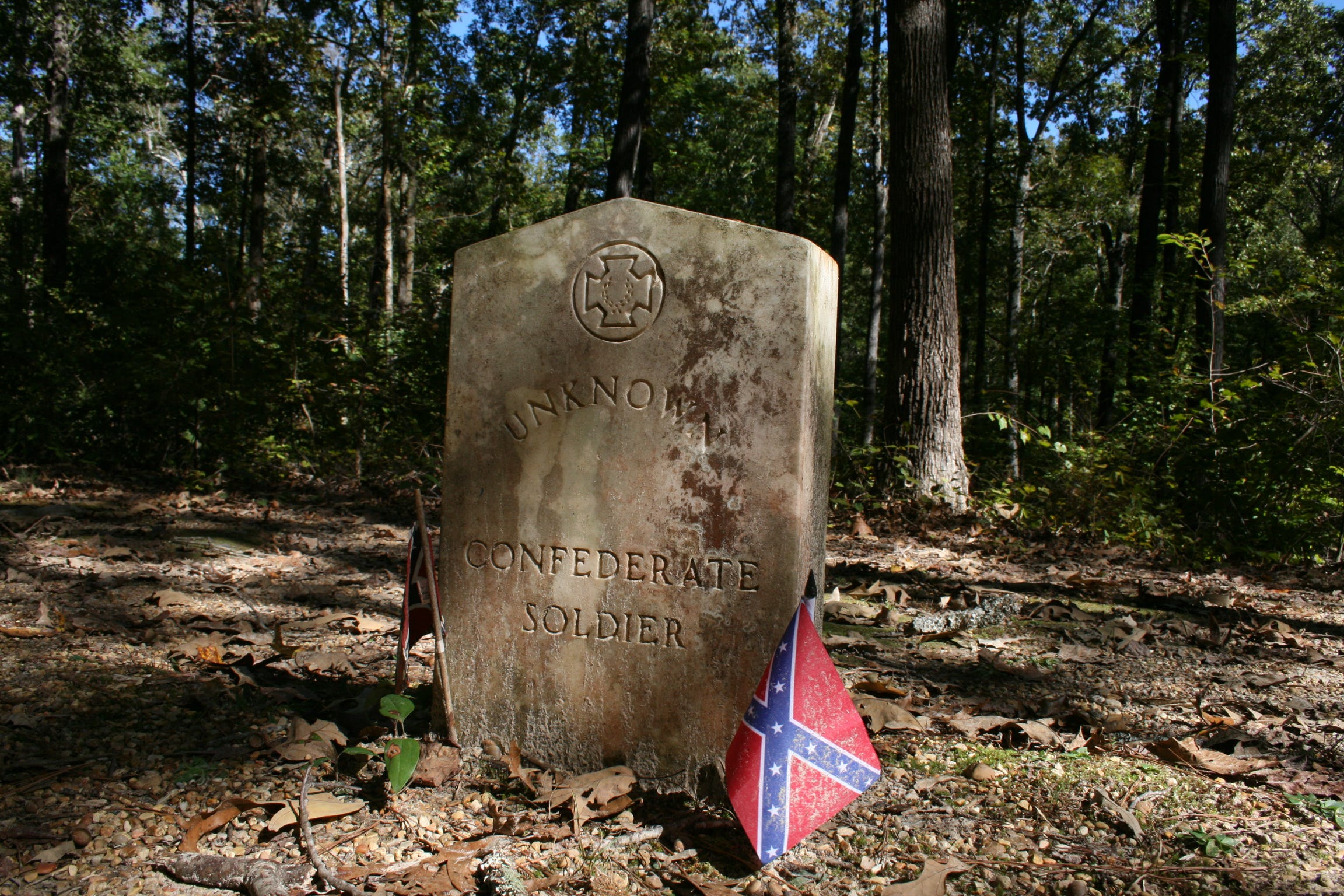
Of course, in these rolling Southern hills, you’re never far from battlefields where the Civil War was fought. Visits to the Vicksburg or Shiloh National Military Parks, the Battle of Raymond, or the Tupelo or Brices Cross Roads National Battlefield Sites make excellent side trips off the Trace. But not far from Tupelo, just a five-minute walk along the Old Trace you’ll find to the graves of 13 unknown Confederate soldiers. (Read our Statement on the Confederacy here.)
Meriwether Lewis Site (milepost 385.9)
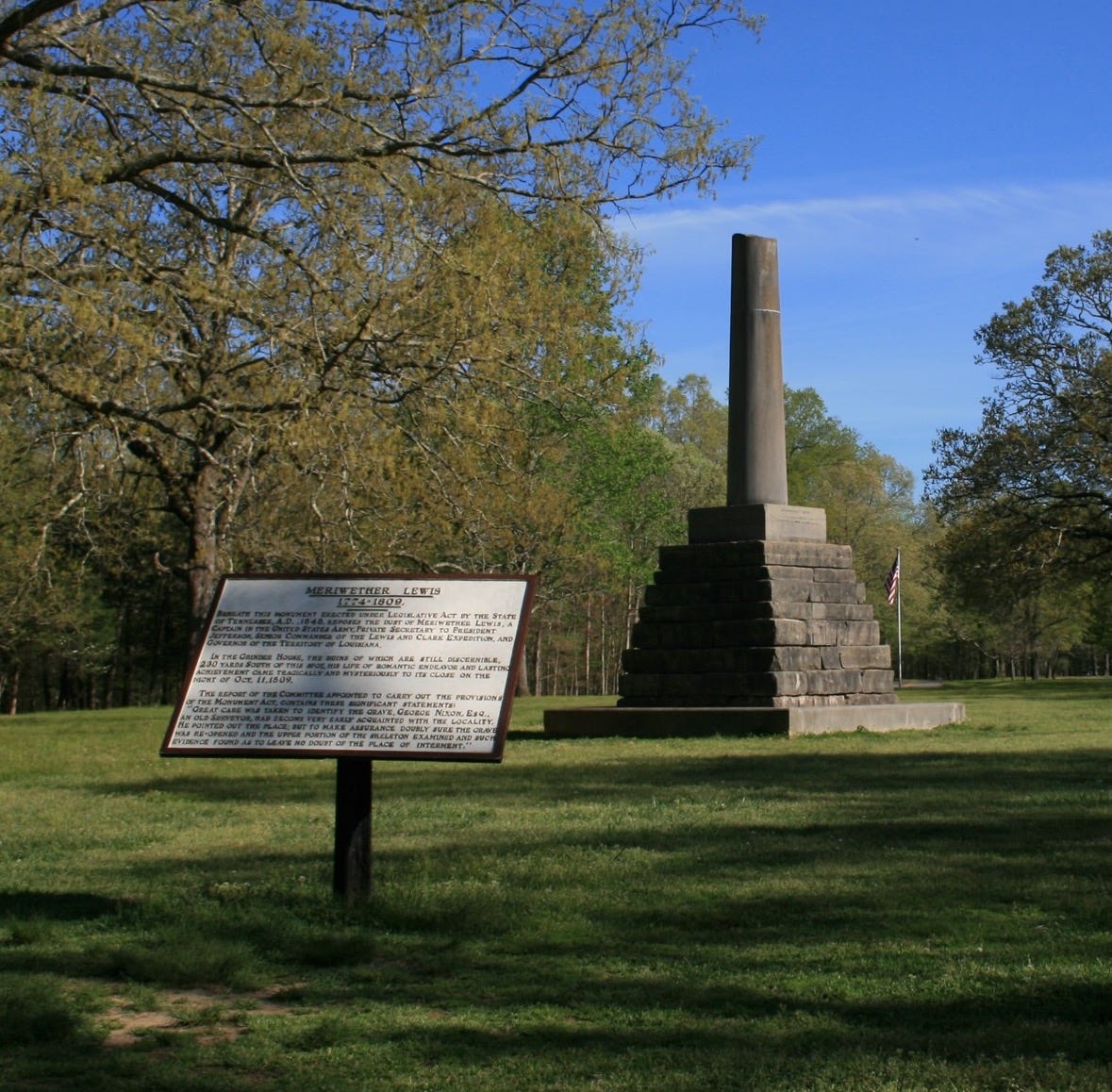
On October 10, 1809, Meriwether Lewis—of Lewis & Clark fame—came to a tragic end at just 35 years old. He was staying at Grinder’s Stand on the Trace, and the debate continues even today about whether his wounds were self-inflicted or not. Attorney Tony L. Turnbow, author of Jefferson’s Spy: The Secret Life of Meriwether Lewis, makes a strong case for murder. Lewis’ monument is a broken shaft that symbolizes the untimely death. The site is also home to a pioneer cemetery of about 100 gravesites; however, the original stones have been replaced with a flat markers near the flagpole.
Tobacco Barn & Old Trace Drive (milepost 401.4)
Last, but not least, if you drive past the Tobacco Barn down an old, rutted 2-mile segment of the Old Trace, you’ll find the Kennedy-Cathey Family Cemetery. With an estimated 4-6 graves (photos here) it may not seem notable. But some additional research uncovered that these plots belong to the family of former slave Levi Albert Kennedy, who took his owner’s name after emancipation and became an evangelist. According to a bio on Find a Grave, Levi and his wife had 11 children, with 7 surviving into adulthood. His daughter Sadie married into the Cathey family and several of her children are buried in this cemetery.
These are just a few of the stories to be rediscovered along the Natchez Trace Parkway. We hope this taphophile collection will inspire you to explore further, given the opportunity.
For further reading:


Congrats on the publication of your book! These cemetery photos here make me want to take a drive.